Seed liberation through seed packet design
This workshop was a combination of several threads of thought combining into this project idea.
I am a print maker, since stepping foot into the print room at uni and smelling the ink, it has been a chosen method of image making. I’d recently been investigating making pre-made stamps as a drop-in activity, making lino carved ‘stamps’ of keffiyeh motifs, talking about the significance of the symbols on the Palestinian scarfs and how they related to the Palestinian heritage and agriculture.
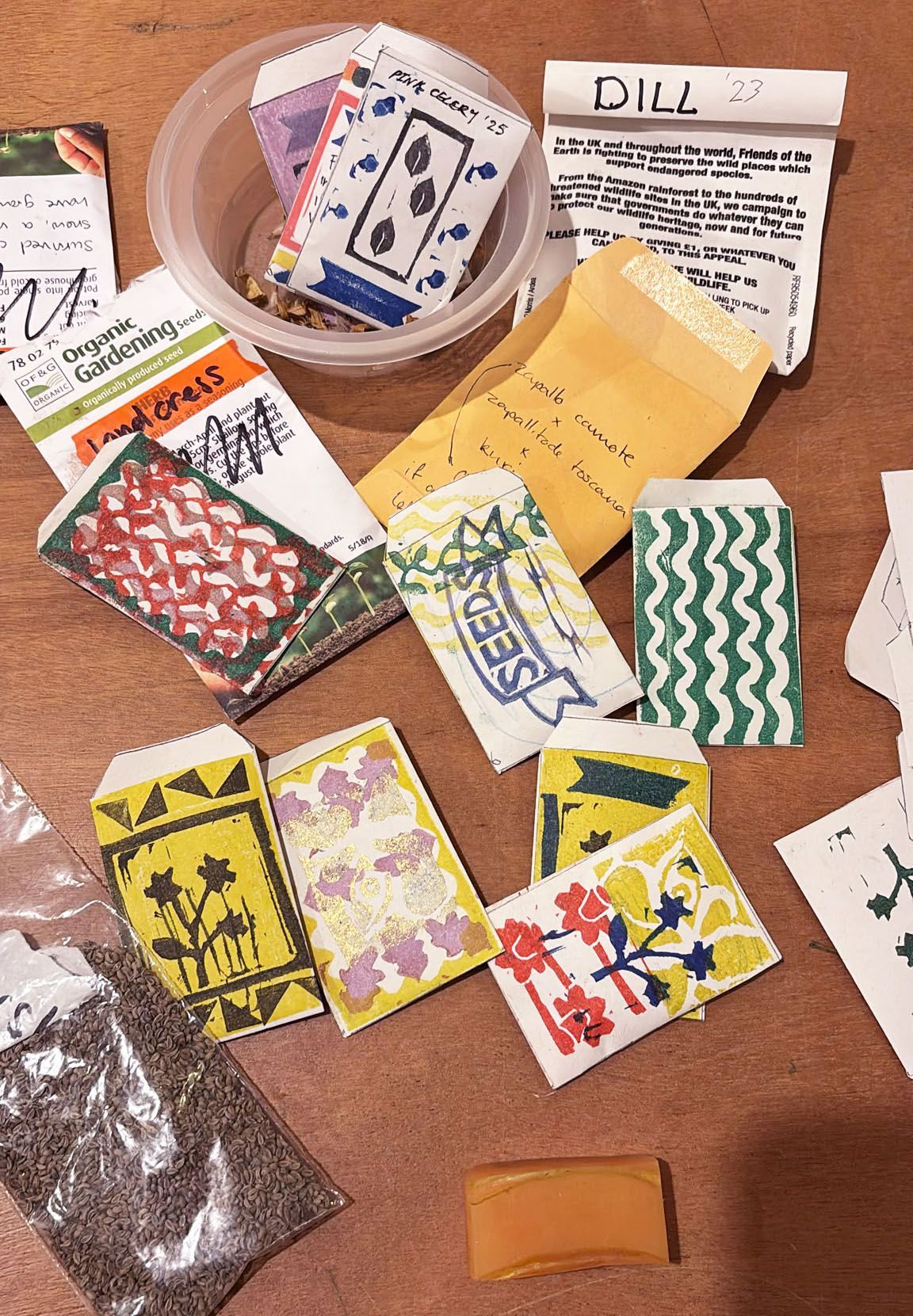
When I was at the riso studio in Dumfries, Alice Griffin leading the workshop suggested to one of the participants they could make a stamp using an old rubber eraser. Loved it! This was exactly the kind of lo-fi print making I was after. Removing oil based inks to make this workshop much more accessible. A lot of my work focuses on food and land sovereignty. An important part of re-connecting ourselves to this is through seeds, saving seeds, exchanging seeds, feeling capable to grow seeds. Growing your own plants and saving your own seeds is such a personal relationship to land. I then considered the ways in which we would image make to reflect that, how the practical packaging and the format we would exchanging our seeds in would tell the stories which we hold in relation to seeds.
I feel seed packet design is such a good way to ‘place make’ as we exchange seeds we communicate who we are, why we grow these seeds, the land they belong too and the histories they hold. Growing another person’s seeds bonds you to them, and this relationship transcends time, connecting you to far back generations of growers.
The rubber stamps are an initial step in getting people thinking about individualised seed packets. The hope is to take community groups through a creative process of exploring their identities, their customs and their relationship to seeds, through a set of creative, conversational workshops. With an aim of co-creating a final design they feel represents them.
I’ve used the rubber stamps three times now. I love that this workshop is adaptable and we can use it in a variety of contexts.
I took the rubber stamps to a ‘Land Justice Gathering’ with representatives of organisations working across the land justice movement. Lots of people brought seeds for us to share, and we made a meanwhile seed library for people to take seeds home in their handmade seed packets. Creating a space of creative wellbeing amongst the busy discussions on strategy and movement building.
This left me with lots of seeds and beans, all with their own wonderful stories and connections. I felt very honoured to be the guardian of these seeds, and believe each seed giver will be pleased with the ways in which I am using their seeds.
I’m now the guardian of a packet of beans, saved from the variety grown during the Cherokee Trail of Tears. Which provided important sustenance during the genocidal forced removal of the Indigenous American communities from their ancestorial homelands in the 1800’s.
The second workshop was part of the Midsteeple Quarter’s set of engagements on the development of their set of town buildings. The seed packets acted as a good way to bring people into the space, discuss their hopes for the future of Dumfries and the importance of greenspaces in our towns.
Thirdly, this workshop has travelled to Lothlorien Therapeutic Gardens, used amongst a set of therapeutic gardening activities which showed the diverse range of gardening jobs across all abilities and interests.
I am hopeful to keep touring with this workshop, bringing it to new communities to experience the joy of seed saving and print making. Hopefully getting a chance to expand this project into a longer, more reciprocal place making project.
Please get in touch if this is something your interested in exploring together.
Emily Tough www.weagreeoneggs.org weagreeoneggs@outlook.com